Countries in Americas
55 countries and territories stretched across two continents and 41,801,081 km², from the Arctic coast of Canada to Cape Horn. Spin the wheel for a random country in the Americas, or browse the full list below.
12 countries are on the wheel right now.
Press Spin and the pointer decides where you are going.
Twelve of 55 countries are loaded at a time so every wedge stays readable. Shuffle for a fresh twelve, or spin the wheel you have.
Americas at a glance
55
Countries & territories
34
Sovereign states
1.03 billion
Total population
12.6%
Share of world population
41,801,081 km²
Combined land area
2
Landlocked
29
No land border
13
Official languages
All countries in Americas (A–Z)
Every entry below opens a full guide with the capital, population, land area, languages, currency, neighbouring countries and a map. 34 of these 55 are sovereign states; the rest are territories, dependencies and overseas regions.
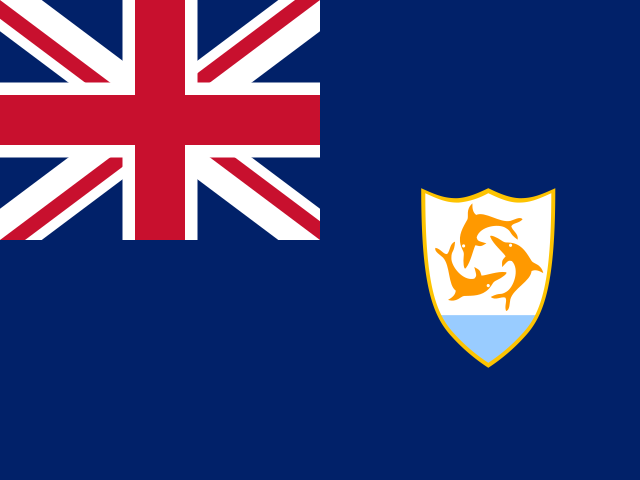
Anguilla
The Valley
15,900
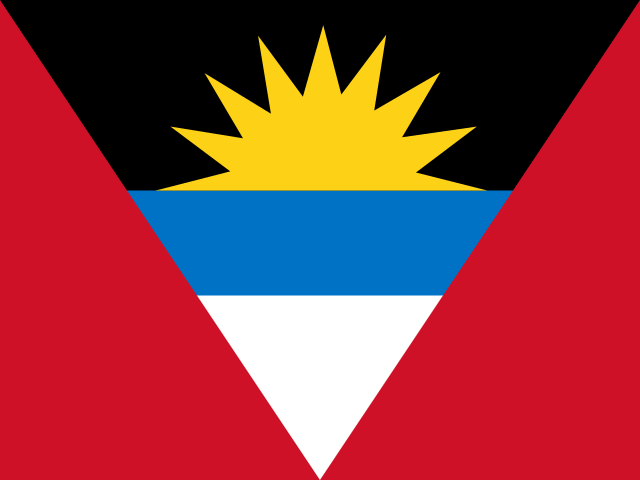
Antigua and Barbuda
Saint John's
93,772
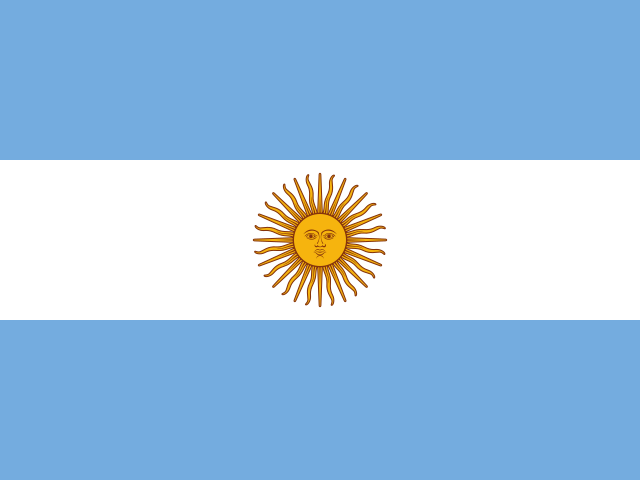
Argentina
Buenos Aires
45.7 million
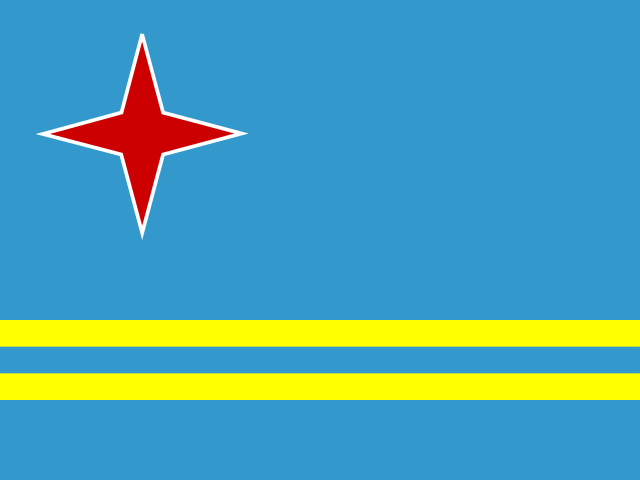
Aruba
Oranjestad
107,995
Bahamas
Nassau
401,283
Barbados
Bridgetown
282,467
Belize
Belmopan
417,072
Bermuda
Hamilton
64,636
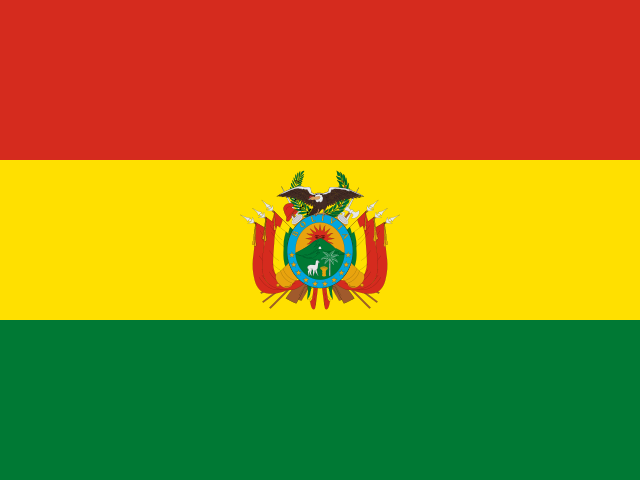
Bolivia
Sucre
12.4 million
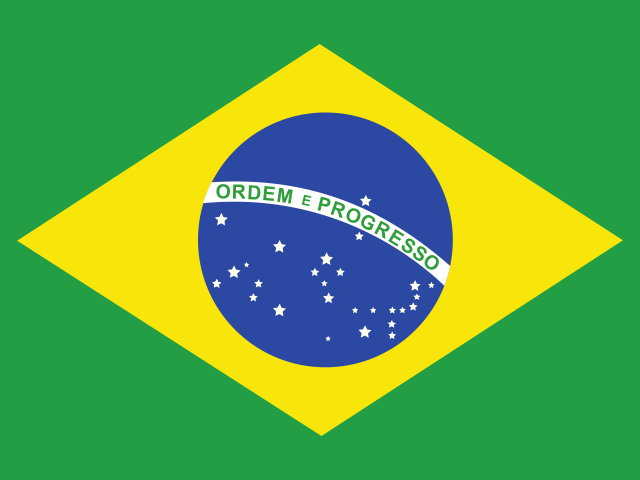
Brazil
Brasília
212.0 million
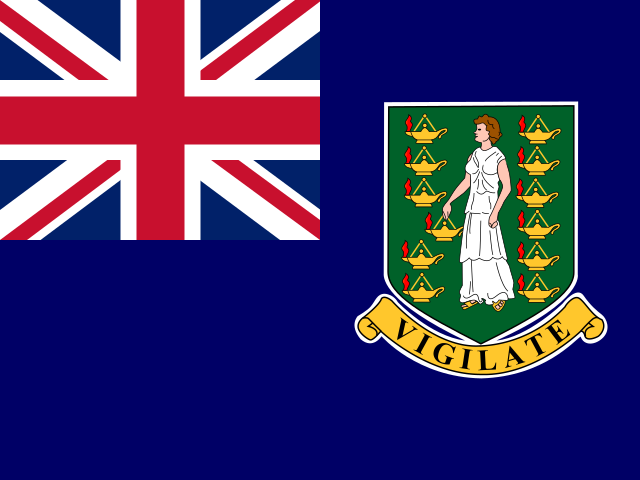
British Virgin Islands
Road Town
39,471
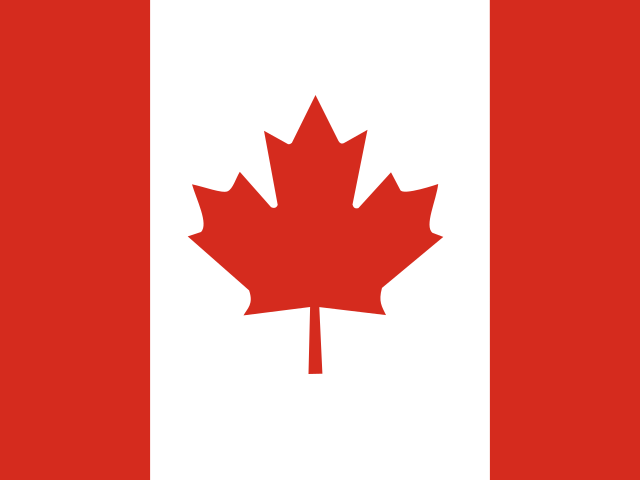
Canada
Ottawa
41.3 million
Caribbean Netherlands
Kralendijk
30,000
Cayman Islands
George Town
74,457
Chile
Santiago
19.8 million
Colombia
Bogotá
52.9 million
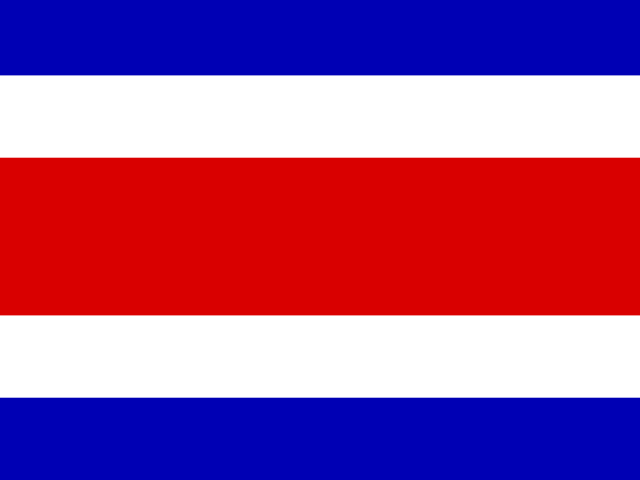
Costa Rica
San José
5.1 million
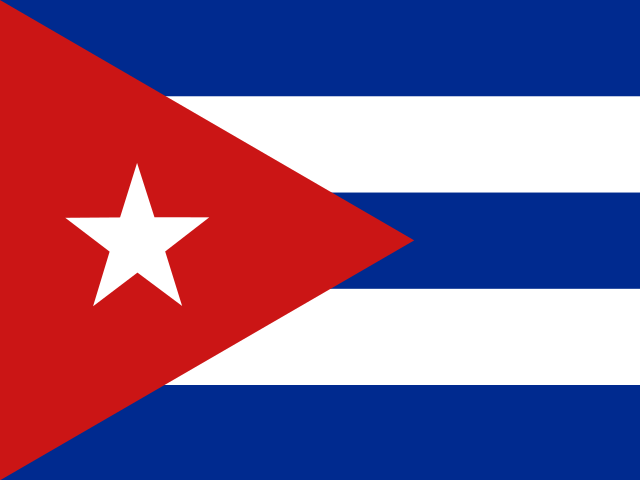
Cuba
Havana
11.0 million
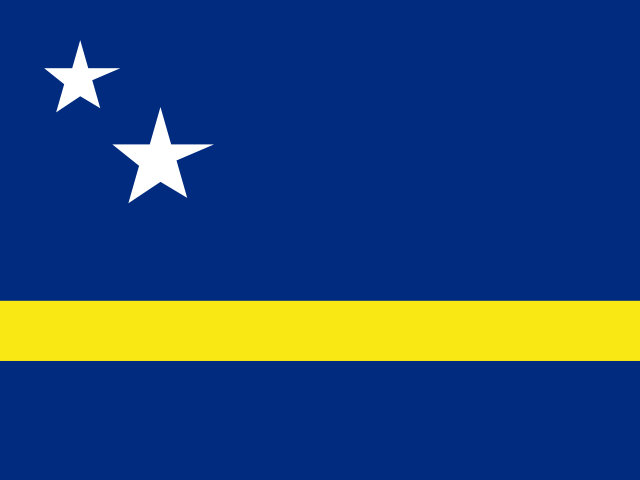
Curaçao
Willemstad
155,967
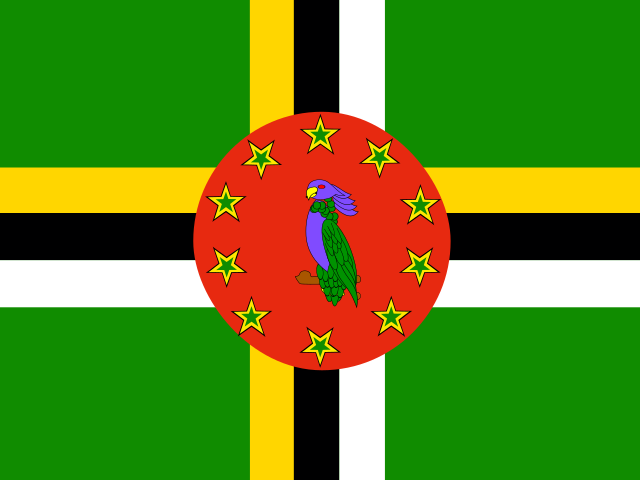
Dominica
Roseau
66,205
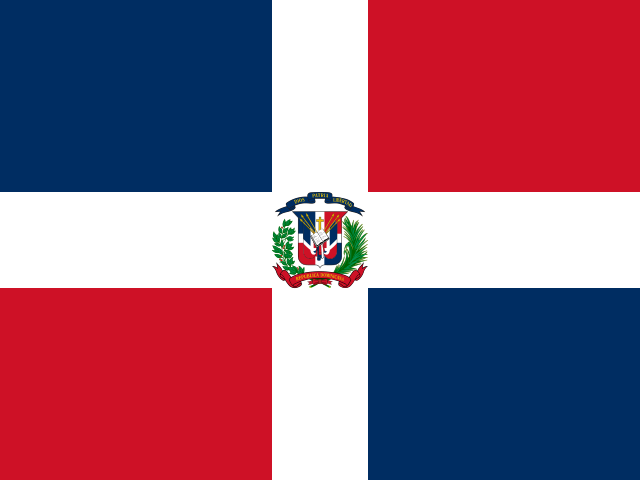
Dominican Republic
Santo Domingo
11.4 million
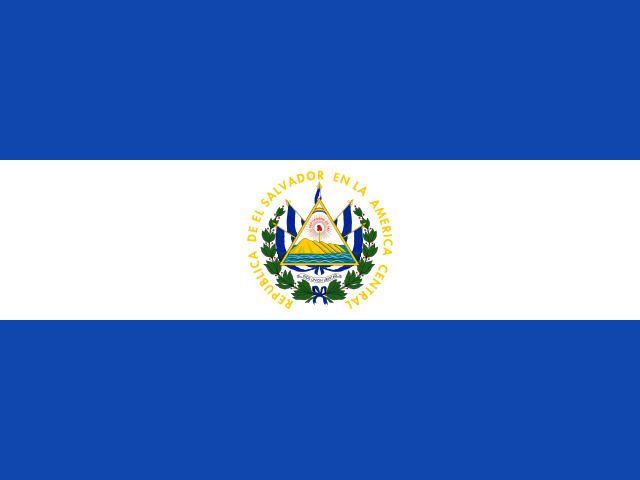
El Salvador
San Salvador
6.3 million
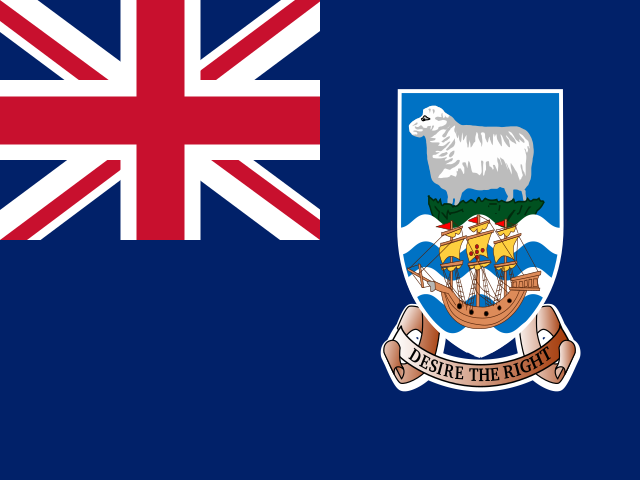
Falkland Islands
Stanley
3,700
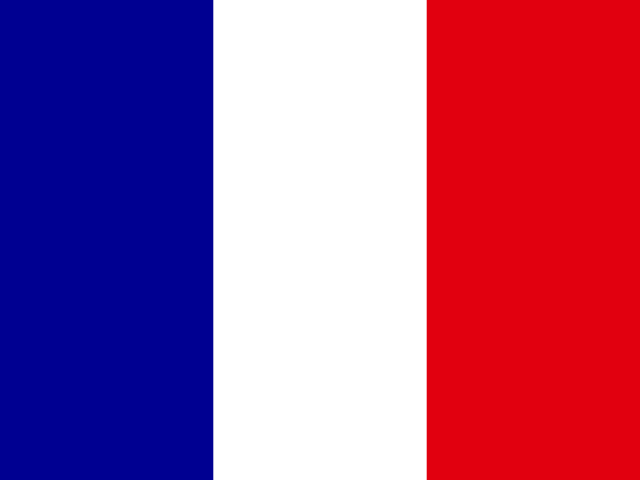
French Guiana
Cayenne
300,000
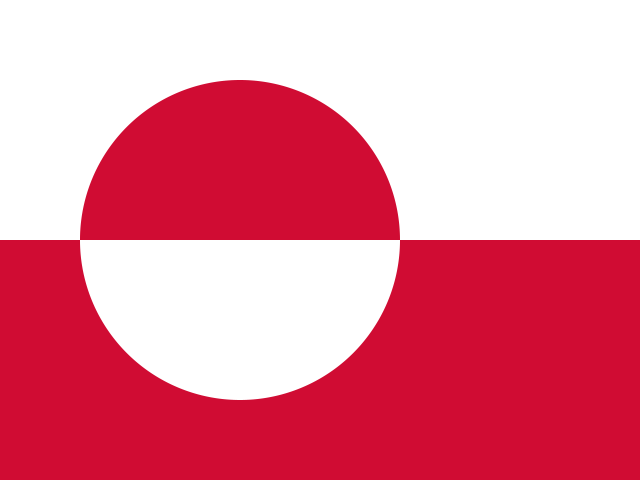
Greenland
Nuuk
56,836
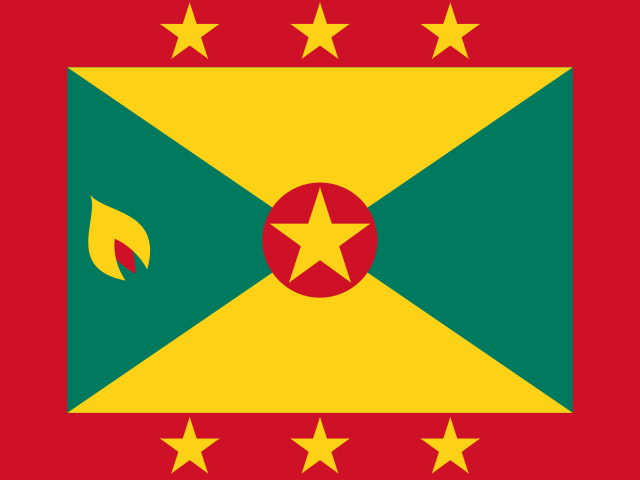
Grenada
St. George's
117,207
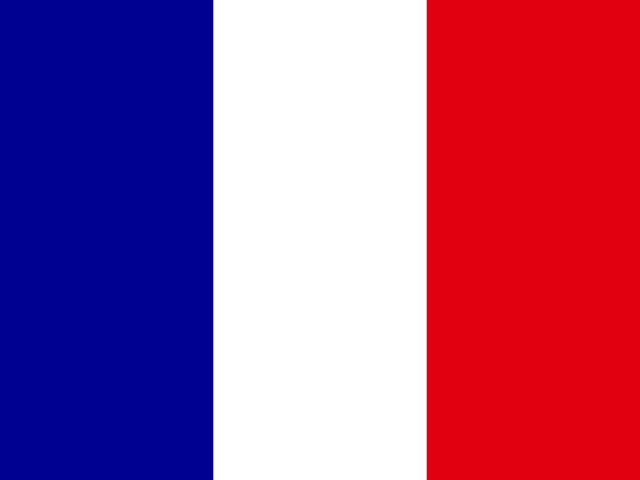
Guadeloupe
Basse-Terre
378,000
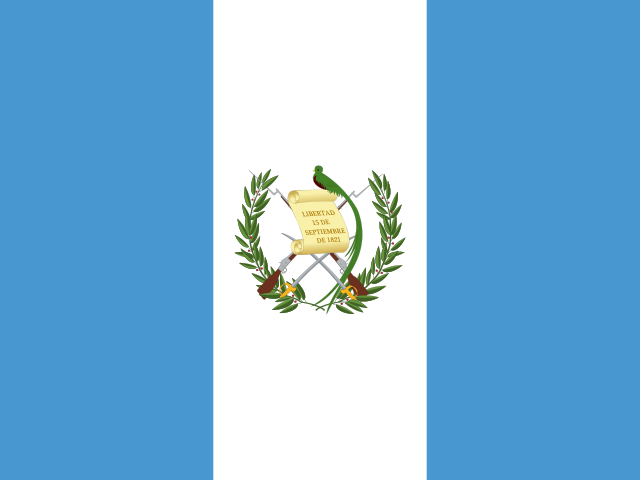
Guatemala
Guatemala City
18.4 million
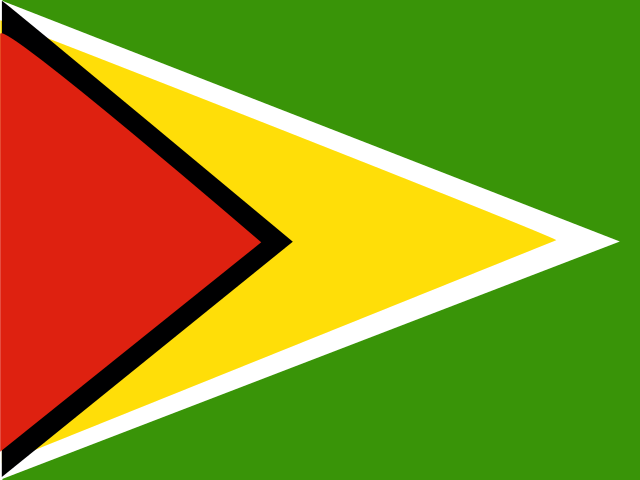
Guyana
Georgetown
831,087
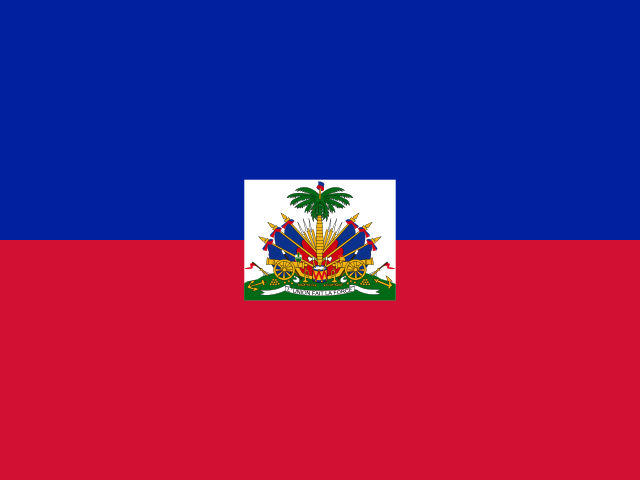
Haiti
Port-au-Prince
11.8 million
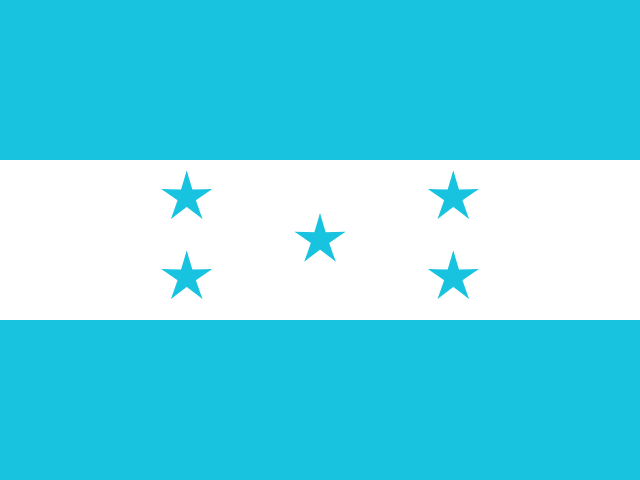
Honduras
Tegucigalpa
10.8 million
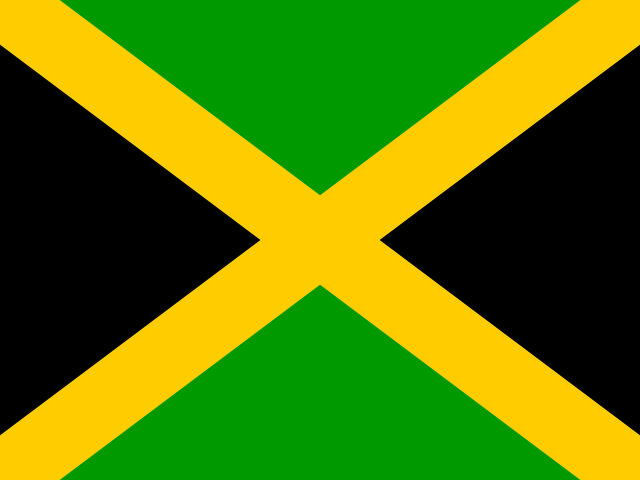
Jamaica
Kingston
2.8 million
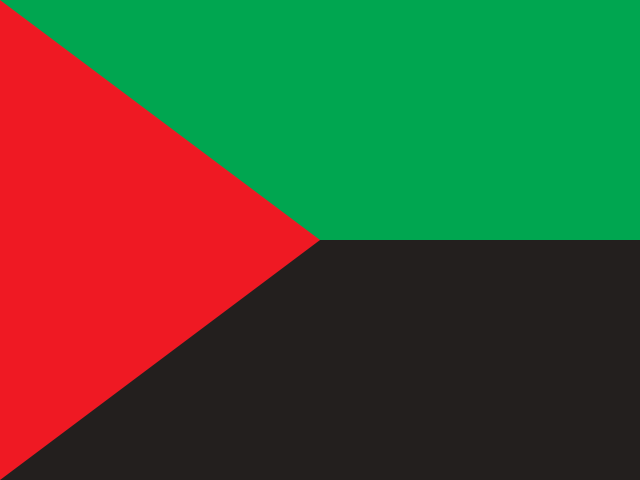
Martinique
Fort-de-France
360,000
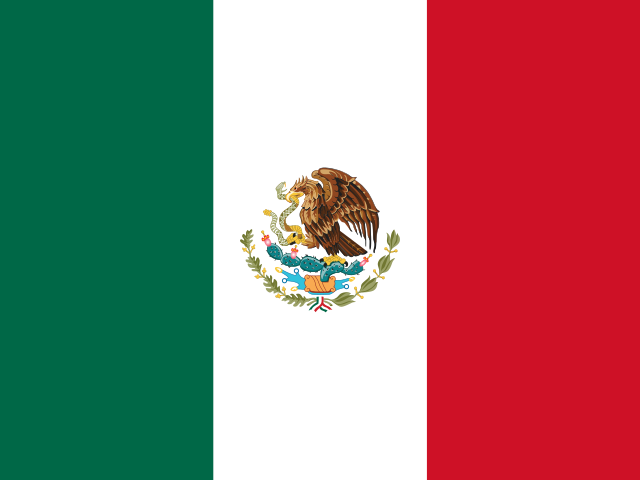
Mexico
Mexico City
130.9 million
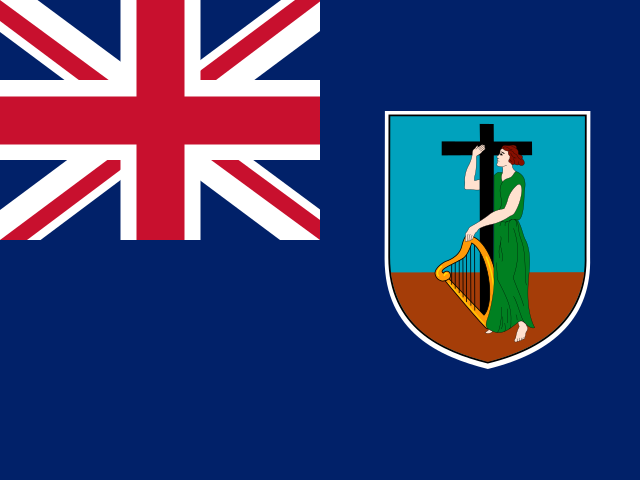
Montserrat
Plymouth
4,400
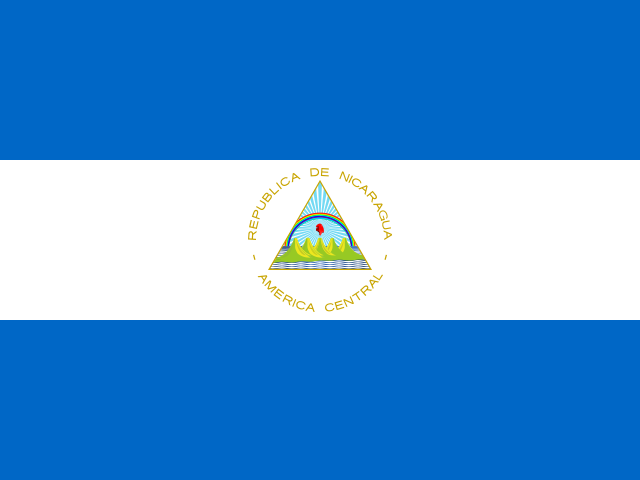
Nicaragua
Managua
6.9 million
Panama
Panama City
4.5 million
Paraguay
Asunción
6.9 million
Peru
Lima
34.2 million
Puerto Rico
San Juan
3.2 million
Saint Barthélemy
Gustavia
11,000
Saint Kitts and Nevis
Basseterre
46,843
Saint Lucia
Castries
179,744
Saint Martin
Marigot
26,129
Saint Pierre and Miquelon
Saint-Pierre
5,800
Saint Vincent and the Grenadines
Kingstown
100,616
Sint Maarten
Philipsburg
43,350
Suriname
Paramaribo
634,431
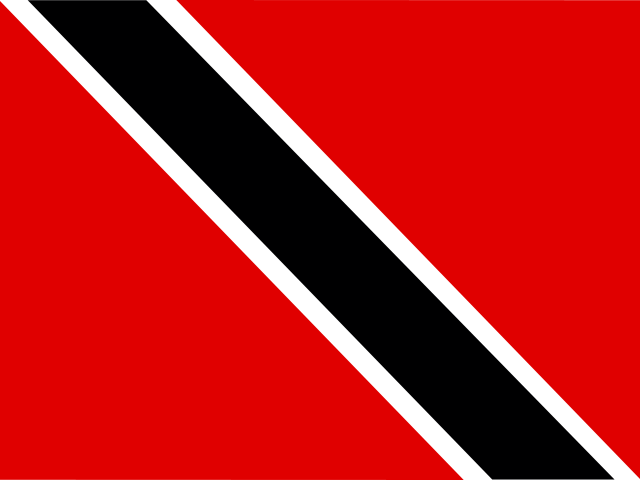
Trinidad and Tobago
Port of Spain
1.4 million
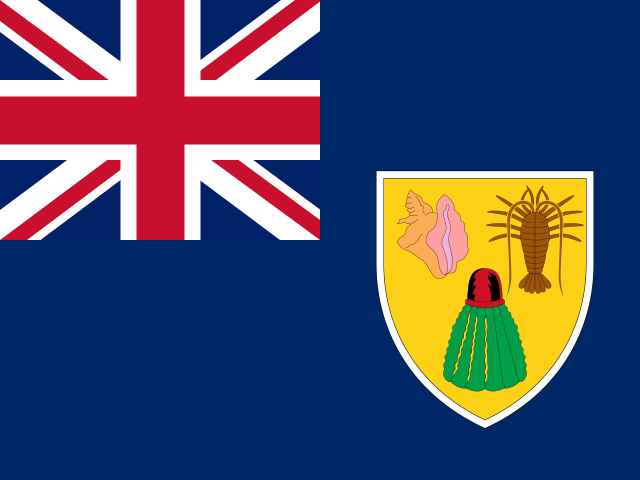
Turks and Caicos Islands
Cockburn Town
46,535
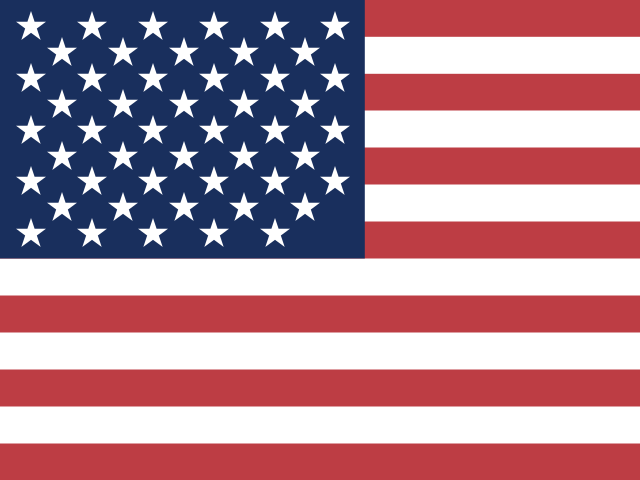
United States
Washington D.C.
340.1 million
United States Minor Outlying Islands
North America
300
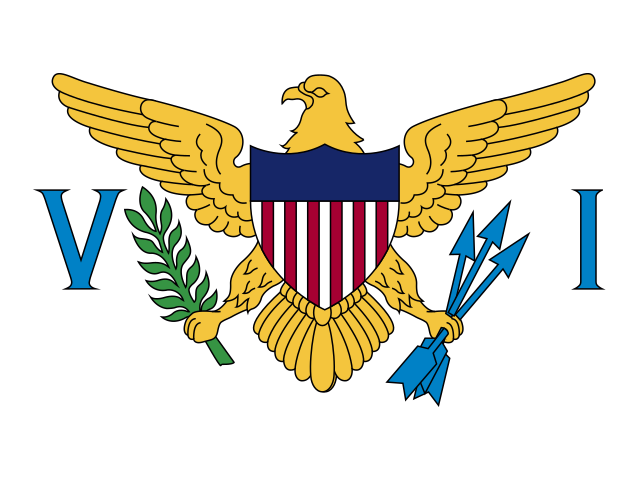
United States Virgin Islands
Charlotte Amalie
104,377
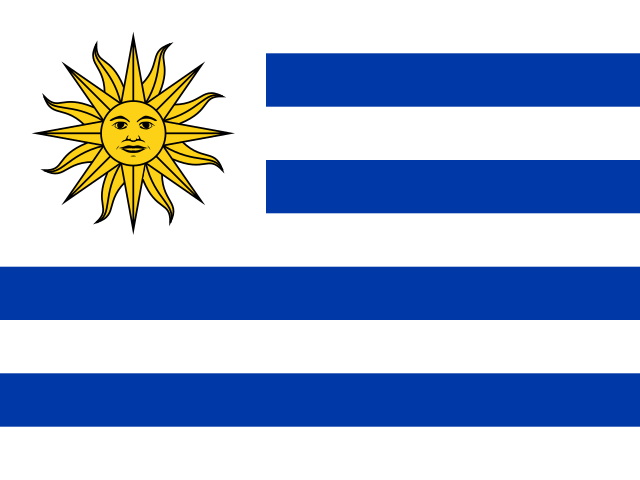
Uruguay
Montevideo
3.4 million
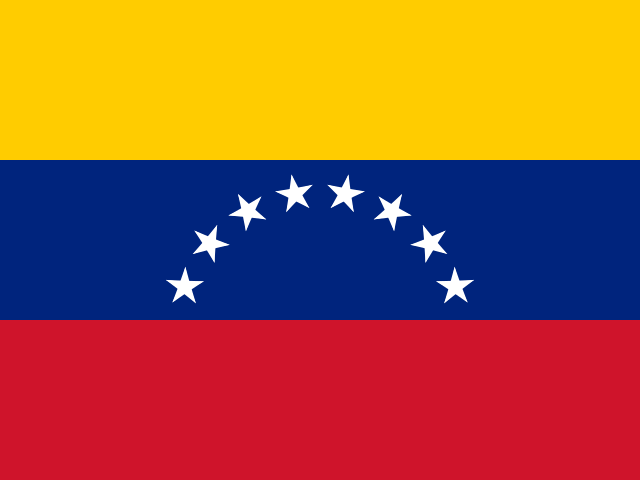
Venezuela
Caracas
28.4 million
Two continents, one region, and a great many islands
The Americas run further north to south than any other landmass on Earth, and this page covers the whole of it: 55 countries and territories, 34 of them sovereign states and 21 of them dependencies or overseas regions. Combined, they cover 41,801,081 km² and hold 1.03 billion people, which is 12.6% of the world's population on roughly a third of its habitable land.
The surprise in the numbers is the Caribbean. Of the 55 entries here, 28 are Caribbean — exactly half the region. South America, which most people picture first when they think of the Americas, contributes only 13. The Caribbean is where the political map fragments into dozens of small islands, many of them still tied to European powers.
That fragmentation shows up in another figure: 29 of the 55 entries share no land border with anyone. Only 2 are landlocked — Bolivia and Paraguay, both in the interior of South America — which makes the Americas the least landlocked populated region on the planet. Almost everywhere here has a coast, and a great deal of the region's history was written by whoever controlled the sea lanes.
The extremes of the Americas
Largest by area
🇨🇦 Canada
9,984,670 km²
Smallest by area
🇧🇱 Saint Barthélemy
21 km²
Most populous
🇺🇸 United States
340.1 million
Fewest people
🇺🇲 United States Minor Outlying Islands
300
Canada is the largest entry at 9,984,670 km², narrowly ahead of the United States at 9,372,610 km² and Brazil in third. The gap between first and third is small; the gap between third and fourth is enormous, because Argentina covers less than a third of Brazil's area. Three countries account for well over half the region's land.
Population runs the other way. United States has 340.1 million residents, Brazil 212.0 million, and then it drops away fast. The smallest sovereign state here is Saint Kitts and Nevis, with roughly 46,800 people on 261 km² — a country you could drive around in an afternoon. The smallest entry of any kind is Saint Barthélemy at 21 km².
How the Americas divide up
Caribbean
2844.3 million people across 28 entries.
South America
13417.5 million people across 13 entries.
Central America
752.5 million people across 7 entries.
North America
7512.4 million people across 7 entries.
Four subregions, wildly uneven. The Caribbean dominates by count with 28 entries but holds a small fraction of the population. South America has 13 entries and roughly two-fifths of the people. North America and Central America have 7 and 7 respectively.
The North America grouping is the odd one, because it includes Greenland and Bermuda alongside the United States, Canada and Mexico. Greenland is the standout: 2,166,086 km² of mostly ice with fewer than sixty thousand residents, self-governing but part of the Kingdom of Denmark, and geologically North American while politically European. It is the single best argument for why "how many countries are there" has no clean answer.
Language and currency in the Americas
Most widespread official languages
- Englishofficial in 27 places
- Spanishofficial in 19 places
- Frenchofficial in 9 places
- Dutchofficial in 5 places
- Guaraníofficial in 3 places
- Papiamentoofficial in 3 places
13 distinct official languages recorded across Americas.
Most widely used currencies
- United States dollar (USD)10 places
- Eastern Caribbean dollar (XCD)8 places
- Euro (EUR)6 places
- Netherlands Antillean guilder (ANG)2 places
- Argentine peso (ARS)1 place
- Aruban florin (AWG)1 place
36 distinct currencies in circulation across Americas.
The Americas are linguistically the most concentrated region in this dataset: just 13 official languages across 55 entries, against 48 in Africa. English is official in 27 of them, Spanish in 19, French in 9 and Dutch in 5. Four European languages cover nearly the entire hemisphere, which is a blunt summary of five centuries of colonisation.
Indigenous languages hold official status in only a handful of places — Guaraní in Paraguay, Aymara and Quechua in Bolivia and Peru — despite hundreds still being spoken daily. On the money side, 10 entries use the United States dollar outright and 8 share the Eastern Caribbean dollar, a single currency covering most of the Lesser Antilles. A further 6 use the euro, all of them French or Dutch overseas territories.
Compare Americas with the rest of the world
Every region has its own page built the same way, so the figures line up and you can put them side by side. The count beside each name is how many countries and territories it holds.
If you would rather not pick a region at all, the global country wheel carries all 249 entries on the site, and the full A–Z index lets you search rather than spin. The continents overview compares all six regions on one screen.
Once you know the map, test it. The capital city quiz can be filtered by region, guess the flag strips out the country names entirely, and the landlocked countries page covers the 2entries here with no coastline alongside the rest of the world's. There are longer write-ups on the blog if you want the background behind the numbers.
Americas: frequently asked questions
How many countries are there in the Americas?
There are 34 sovereign countries in the Americas. This page lists 55 entries because it also covers territories such as Puerto Rico, Greenland, Bermuda, Martinique and the Falkland Islands. Split by continent, that is 12 sovereign states in South America, 3 in North America, 7 in Central America and 13 in the Caribbean.
What is the largest country in the Americas?
Canada, at 9,984,670 km², which also makes it the second-largest country in the world after Russia. The United States is a close second in the region and Brazil a close third. Despite its size, Canada has only 41.3 million residents, most of them within a hundred miles of the southern border.
Which countries in the Americas are landlocked?
Only 2: Bolivia and Paraguay, both in the interior of South America. Bolivia lost its Pacific coastline to Chile in the War of the Pacific in 1884 and has never accepted the loss — it still maintains a navy on Lake Titicaca and marks a national Day of the Sea every March. Paraguay reaches the sea through the Paraná river system.
How many Caribbean countries and territories are there?
28 of the 55 entries on this page are Caribbean, which is exactly half. Thirteen are independent sovereign states and the rest are territories of the United States, the United Kingdom, France or the Netherlands. It is the most politically fragmented part of the Americas by a wide margin.
What is the smallest country in the Americas?
Saint Kitts and Nevis, at 261 km² with about 46,800 residents, is the smallest sovereign state in the Americas and the smallest in the Western Hemisphere. The smallest entry of any kind on this page is Saint Barthélemy at 21 km², a French overseas collectivity in the Lesser Antilles.
Is Greenland part of the Americas?
Geographically yes — Greenland sits on the North American tectonic plate and is closer to Canada than to Europe, which is why it appears in this region. Politically it is an autonomous territory within the Kingdom of Denmark. At 2,166,086 km² it is the world's largest island and larger than every country in the Americas except Canada, the United States, Brazil and Argentina, yet fewer than sixty thousand people live there.
How is the random country wheel on this page different from the main one?
This wheel is loaded only with countries from this region, so every spin lands inside it. The wheel on the main spin page carries all 250 countries and territories on the site. Use the regional wheel when you are studying one part of the world and the global one when you want a genuine surprise.
Where do these population and area figures come from?
They come from the same dataset that powers every country guide on this site, built on public country data and the most recent published estimates for population and land area. Population figures in particular are estimates and move constantly, so treat them as accurate to within a percent or two rather than to the last person.
Why does this page count territories as well as countries?
Because they are real places with flags, capitals and residents, and leaving them out would hide some of the most interesting entries on the map. Every guide states plainly whether a place is a sovereign state or a territory, and the sovereign count is given separately in the statistics above so you can use whichever number you need.
Can I use these figures in a school project?
Yes, and it is worth citing the date you looked them up, because population estimates change. If your project needs one authoritative source, cross-check the headline numbers against the UN World Population Prospects or the country's own statistics office. The rankings here — largest, smallest, most populous — are stable and safe to quote.